
Does Agentic AI Make Economic Sense for Mid-sized Carriers?
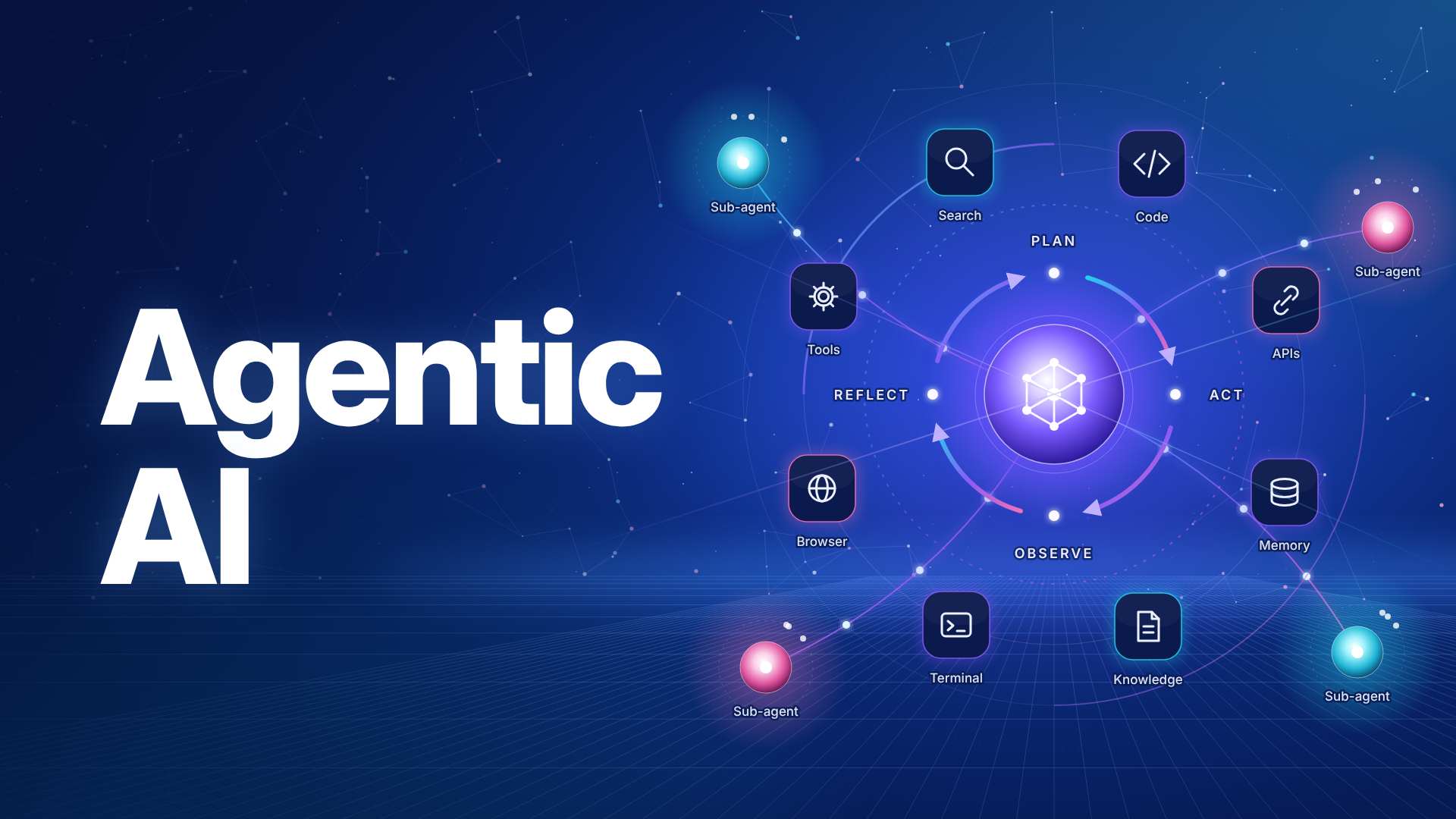
Tech vendors are pushing Agentic AI as the next big thing, leaving most large insurers scrambling to move pilots to production. Smaller insurers are in a quandary: can they afford to ignore it for now, or will they be left behind? It feels like the blockchain hype cycle all over again. Back then, we were told decentralized ledgers would revolutionize policy administration. Instead, outside of a few expensive experiments, it went nowhere.
Agentic AI could easily become another chapter in that playbook. Yet, if we go by Gartner’s reports, by 2028, one-third of enterprise software applications will include agentic AI, and 15% of day-to-day work decisions will be made autonomously, up from just 1% in 2024.
That sounds impressive; however, ultimately, it’s the economics of it that may have the deciding vote.
The Case for Agentic AI is not Hard to Make
Insurance is known for the amount of coordination required. All very necessary but also very tedious. This is why agentic AI has many supporters; it can not only automate standalone tasks, but also can connect all the dots between them.
Why does that matter? Let’s take a typical scenario. Traditional AI might help extract data from a loss run. By contrast, an AI agent could spot missing information, pull additional reports, cross-check details against underwriting criteria, flag exceptions, update records, and bring in a human only when necessary. The value of agents is that they reduce the friction of constant human handoffs.
It’s no surprise that large insurers like AIG are paying attention. They’ve already seen strong returns from conventional AI, especially in underwriting and claims. For example, AIG’s Lexington unit processed more than 370,000 new business submissions in 2025 with a 26% leap in volume, and saw a 35% improvement in the submit-to-bind ratio. That growth came from leveraging traditional AI, not agentic systems, but it’s exactly this kind of operational gain that makes AIG eager to experiment further. Now, they’re building orchestration layers for agentic AI, carefully defining what data agents can access, how tasks are sequenced, and when humans need to step in.
It’s tempting for regional insurers to look at results like these and wonder: Why not us? The technology isn’t the barrier. The real question is scale. If an agentic workflow saves an underwriter 30 minutes, that’s extra capacity. However, unless there’s new business to fill those hours, the savings may not translate into real dollars. For a carrier handling many thousands of transactions, that added capacity means faster responses and more growth without extra hiring. For a smaller insurer, there might not be enough extra work waiting to justify the investment.
So I would say that being a “smaller insurer" is not really the economic category that matters. Transaction density is.
Also Read: Policy Platform as a Product: Why Carriers Must Think Like SaaS Companies
AI Agent Technology is Becoming Easier to Buy
As with most technology, there are software companies and vendors building agentic AI workflows. A smaller insurer can potentially buy an agentic workflow rather than build an enterprise agent architecture from scratch.
That changes the capital equation. But it doesn't remove the cost equation.
Production-grade agentic AI requires data access, integration, orchestration, monitoring, auditability and human exception handling. And the more autonomy an insurer gives an agent, the more important those controls become.
McKinsey's August 2026 research on agentic economics found that some customer-facing single-agent workflows can cost $20,000–$30,000 to run, while multi-agent workflows can reach $100,000–$200,000. It also found that the economics improve substantially when agents are applied to high-value, repeatable work at scale.
What Happens When AI Moves From Recommending to Acting
This matters because an insurance agent cannot simply be treated like a more sophisticated chatbot. When you give an agent the ability to access multiple systems, make decisions and take action, you need to know what it did and why.
-
Who authorized the action?
-
What data did it use?
-
When did a human intervene?
-
Could the entire sequence be reconstructed later?
These questions are becoming harder to ignore, with regulators taking a serious look at the issue. There is no contesting that an AI system that helps make an intelligent recommendation is very different from an AI agent that actually takes the next steps on its own. That creates a different level of accountability
The NAIC in 2026 has created an AI Systems Evaluation Tool that gives regulators a defined way to examine insurers' AI use, how they manage risk, as well as what data they use to govern these high-risk AI models. The tool has been piloted by 12 states since March 2026. The pilot is now informing revisions to the evaluation framework, with the NAIC moving toward broader adoption.
This should not make smaller insurers hesitant if they have a good case for Agentic AI adoption. Governance will have to be balanced with productivity claims. This is where the economics can begin to tilt against enterprise-scale agentic AI.
Yet with Agentic AI, Smaller Insurers Have One Advantage
There is a counterargument, and it is an important one. A smaller insurer doesn't necessarily need an enterprise-wide agentic operating model. It may need one workflow.
A carrier with a concentrated book could identify one particularly expensive bottleneck and automate the work around it, rather than trying to build an army of interconnected agents. That could make the economics much more attractive.
The market is already showing that regional and smaller insurers aren’t being left out by AI vendors. Products are increasingly being built around specific insurance workflows, rather than requiring carriers to build everything themselves.
There are already examples that regional or niche insurers could look at. For instance, mid-sized national carrier Amica has adopted an agentic AI platform for regulatory and market intelligence. The insurer says the technology can search more than 200 million pages of regulatory filings, cutting research time by a whopping 95% compared with doing it manually. More importantly, they’re using it for a workflow where Agentic AI can make a real difference, rather than putting an autonomous underwriting engine in charge of production coverage decisions.
The real risk may not be moving too slowly or too quickly. It may be misjudging where autonomy actually creates an advantage by using largely autonomous Agentic AI. This is different from conventional AI capabilities.
The insurers that get the most from agentic AI may not be the ones with the most agents. They may be the ones that identify the few places where human coordination has become disproportionately expensive, slow or difficult to scale and where giving software greater autonomy genuinely changes the economics of the business.
That is still a much smaller universe than the current agentic AI hype would suggest.
Topics: A.I. in Insurance







.jpg)