
What Can US Insurance Companies Expect from Insurtech: 2023 vs 2026

Digital transformation was the buzzword for 2023. Insurers were coming out of the pandemic with the growing realization that digitization and personalization were a necessity when it came to meeting customer satisfaction. Those who adapted to the new paradigm with updated insurance technology sold more benefits faster as well as smarter. Regional and Mid-size carriers were also discovering that there were insurtechs providing them solutions that helped level the playing field against larger carriers.
By 2026, the conversation has evolved significantly. Digital transformation is no longer viewed as a competitive advantage — it is now considered baseline operational infrastructure. Insurance technology priorities have shifted toward how intelligently insurers can operationalize AI, orchestrate ecosystems, improve underwriting precision, combat AI-enabled fraud, and modernize core operations without increasing operational complexity.
In 2023, insurers were still asking whether automation and AI would deliver value. In 2026, the question is how to govern, scale, and securely integrate AI across underwriting, claims, customer servicing, compliance, and distribution workflows.
Insurance technology breakthroughs
New underwriting methods made their mark in 2023 Insurtechs made it easier to expand ecosystems and access third-party data. This was reflected in increased automation of the initial submission process. Commercial insurance contributes to more than half of premiums in the P&C insurance market. Yet personal insurance usually takes the giant slice of the tech pie. This changed in 2023 with more mainstream tools becoming available for automating rating and quoting for the small commercial insurance market.
Now jump to the present day, the speed at which technology evolves is based on the current-day market needs.
Insurers are no longer investing in automation simply to digitize workflows, the priority has shifted toward using AI to improve underwriting accuracy, reduce operational costs, and process increasingly complex commercial risks in real time.
Generative AI adoption across insurance has accelerated sharply. According to Conning’s 2025 Survey on AI & Insurance Technology, 90% of insurers are now in some stage of Generative AI evaluation or implementation, while 55% report early or full adoption across their value chains. The survey also found that full AI integration into insurance workflows increased from 8% in 2024 to 34% in 2025.
Commercial underwriting has become one of the biggest focal points for AI investment. Insurers are increasingly using AI-driven underwriting models to analyze unstructured data sources such as inspection reports, emails, loss runs, legal documents, IoT feeds, and broker submissions. Natural language processing (NLP) technologies are also being used to convert large volumes of commercial insurance documentation into structured underwriting intelligence.
The market is also seeing growing interest in agentic AI systems that can assist underwriters by summarizing risks, identifying missing information, prioritizing submissions, and recommending actions while still maintaining human oversight for final decisions. Research published in 2026 showed that AI underwriting systems using adversarial self-critique mechanisms reduced hallucination rates from 11.3% to 3.8% and improved underwriting decision accuracy from 92% to 96% in commercial insurance workflows.
At the same time, insurers are becoming more selective about where automation delivers measurable ROI. Claims management, underwriting support, document ingestion, renewal processing, and fraud detection are emerging as the areas generating the strongest operational returns. AI-driven fraud prevention has become especially important as insurers face rising risks from synthetic identities, manipulated claims documentation, and deepfake-enabled fraud. Reuters reported that AI-focused insurtech firms accounted for 33% of total insurtech funding as insurers increased investment in technologies capable of improving risk assessment and fraud detection.
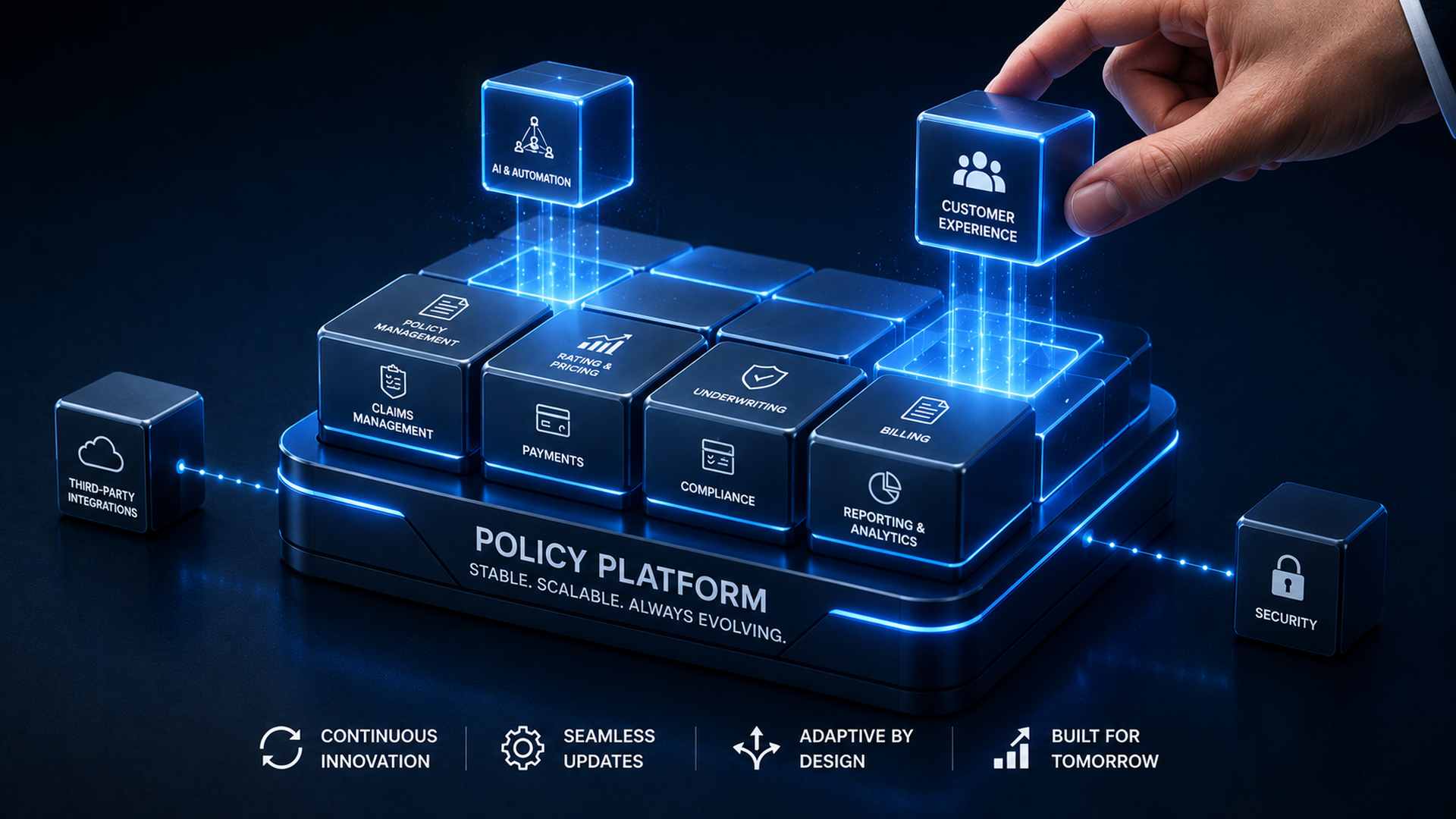
Technology priorities have also expanded beyond standalone automation tools. Insurers are increasingly demanding API-first, cloud-native platforms capable of integrating data across brokers, MGAs, reinsurers, third-party data providers, and internal core systems. This is driving stronger interest in ecosystem-based insurance infrastructure and modular platforms that support faster product development and more agile commercial underwriting operations.
Embedded Insurance Trends 2023 vs Now
Today, embedded insurance has moved far beyond experimentation and is becoming a core distribution strategy for insurers looking to expand digital reach and generate contextual, point-of-need coverage opportunities. What began in 2022 as pilot initiatives tied to ecommerce and travel platforms has evolved into a broader ecosystem play spanning automotive, mobility, fintech, property management, healthcare, logistics, and B2B platforms.
According to a 2025 report from Deloitte, embedded insurance is increasingly being driven by customer demand for seamless, integrated experiences where protection products are offered within the natural purchase journey rather than through separate insurance channels. Insurers are now prioritizing partnerships that provide access to high-frequency customer interactions and real-time behavioral data.
The technology priorities surrounding embedded insurance have also changed significantly since 2023. Early efforts focused primarily on enabling API connectivity and basic policy integration into third-party platforms. Current market demand is centered around real-time underwriting, dynamic pricing, instant policy issuance, automated claims servicing, and personalized product recommendations delivered directly within digital ecosystems.
This shift is increasing pressure on insurers to modernize core systems and adopt API-first architectures capable of supporting high-volume partner integrations. Many insurers are also investing in low-code and configurable integration platforms that allow new embedded products and distribution partnerships to be launched faster without major redevelopment cycles.
Embedded insurance growth is also being accelerated by advances in AI and data analytics. Insurers are increasingly using AI models to assess contextual risk signals at the point of sale, improve quote accuracy, and personalize coverage recommendations based on customer behavior, transaction data, geolocation, and usage patterns.
Research from Swiss Re estimates that the global embedded insurance market could exceed $700 billion in gross written premiums by 2030 as insurers increasingly integrate coverage into digital commerce ecosystems, connected devices, and platform-based business models.
At the same time, insurers are recognizing that embedded insurance model for P&C insurance introduces operational and regulatory complexity. Managing partner ecosystems, maintaining underwriting consistency, ensuring compliance across multiple jurisdictions, and delivering seamless customer servicing across third-party channels are becoming major strategic priorities for insurance technology providers.
Digital Tech Investment Trends for US Insurance Companies
Technology will continue to be key to insurers' ability to scale and grow. For most insurers, systems and capabilities have improved while others are in the process of getting their technology infrastructure up to speed, albeit in a gradual manner. However, business strategies will have to contend with emerging challenges today - rising inflation, threats of recession, and climatic upheavals. In spite of these challenges, insurers cannot be stuck in a holding pattern. Insurance companies will need insights into what opportunities exist and where to expect growth.
IT budgets will be invested in areas that will improve efficiencies such as automation and business intelligence. AI will become a trusted coworker according to Forrester surveys.
Data shows that a large number of enterprises, not just in the insurance sector, have made significant investments in AI in the years leading up to 2026. These organizations are seeing positive results from these investments. Their success has become the driver for more insurance companies, particularly mid-size as well as regional insurers to move towards enterprise applications with greater automation.
AI will deliver value but getting it right is not always a guarantee. This is why insurtechs like SimpleSolve are also working with ecosystem partners to drive business transformation initiatives.
By 2026, AI governance has evolved from a future concern into an operational requirement. Insurers are increasingly implementing AI governance frameworks focused on model transparency, explainability, auditability, bias mitigation, and regulatory compliance as AI becomes embedded into underwriting and claims workflows.
Such changes will require insurance companies to work closely with their technology partners.
Acutely aware of large carriers leveraging technology to compete and grow, SimpleSolve has focused on developing solutions that are leveling the playing field for Regional and Mid-Size Carriers. Interested in a demo to see how this works? Schedule a call with us today.
Topics: Digital Transformation




.jpg)